Beijing is a city I’ve visited regularly over the years during my cabin crew layovers, and each trip gave me the chance to explore a different corner of it. It’s an incredible place, but travelling in China can feel a little complex at first, from digital‑only payments and language barriers to apps that work differently and the need for a VPN. Once you understand those basics though, Beijing becomes surprisingly easy to navigate, with efficient transport, amazing food, and a rich history. This guide keeps everything simple so first-timers can explore with confidence rather than feeling overwhelmed.
This post contains affiliate links. If you book or buy through them, I may earn a small commission at no extra cost to you, which helps keep this blog running. You can read how your data is handled in the privacy policy. If you found this helpful, and would like to support this little corner of the internet you can do so here.
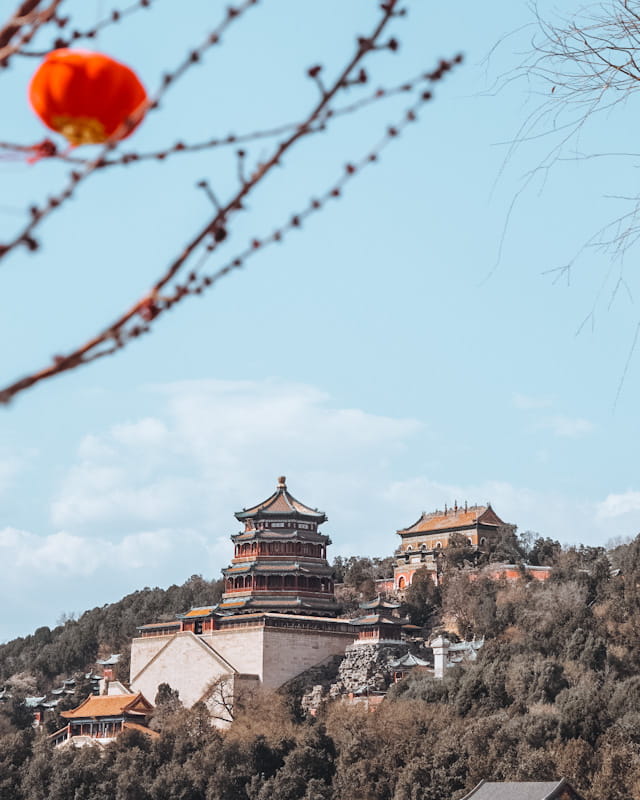
- Best Time To Visit: Spring (April–May) and autumn (September–October) offer the best weather and clearer skies.
- Currency & Payments: Chinese Yuan (¥ RMB). Cards aren’t widely accepted. WeChat Pay and Alipay are most common, but many travellers now use international cards through these apps. It’s still best to carry a little cash for street food, markets, and small purchases.
- Daily Budget: For current cost estimates, check Budget Your Trip, which updates prices regularly based on real traveller data.
- Getting Around: The metro is fast, cheap, and easy. Taxis and Didi are widely available. Walking is great in hutong areas.
- Language Tips: English is limited. Download a translation app and keep key phrases or addresses written in Chinese characters.
- Useful Apps & VPN: WeChat, Alipay, Didi, Baidu Maps, and Google Translate. Many Western apps are blocked, download a VPN before arrival.
- Visa & Entry Requirements: Visa rules vary by nationality. Travellers who are not UK citizens should check their own government’s official travel advisories for the most accurate guidance. For the most up‑to‑date information for UK travellers, refer to the official UK Government Travel Advice.
What To Expect In Beijing
Beijing is vast, energetic, and full of striking contrasts from historic temples, sleek modern districts, quiet hutongs, and fast multi‑lane roads all mixed together. It’s a safe and well‑organised city, but the sheer scale, frequent security checks, queues, and reliance on digital systems can catch first‑timers off guard. China leans heavily on its own apps, so payments, maps, and communication work differently, and many Western apps require a VPN.
Once you’re set up with WeChat, Alipay, translation tools, and the metro system, everything becomes easy. Expect bag checks at stations, carry your passport for hotel registration, download key apps before you arrive, and keep an eye on air quality.
Carry a small amount of cash for taxis, small purchases, and street vendors, although most locals rely almost entirely on mobile payments. Some places accept international cards, but the majority of transactions are still expected to be made through WeChat Pay or Alipay.
Most public museums and historical sites across China follow a nationwide Monday closure policy (so always double-check opening hours before you visit). These closures allow for staff training, deep cleaning, and artefact care, but they also mean that attractions which remain open on Mondays, such as parks, private museums, the Great Wall etc tend to be busier as visitors adjust their plans. If you’re visiting popular attractions on a Monday, aim to arrive earlier in the day to enjoy them before the crowds build.
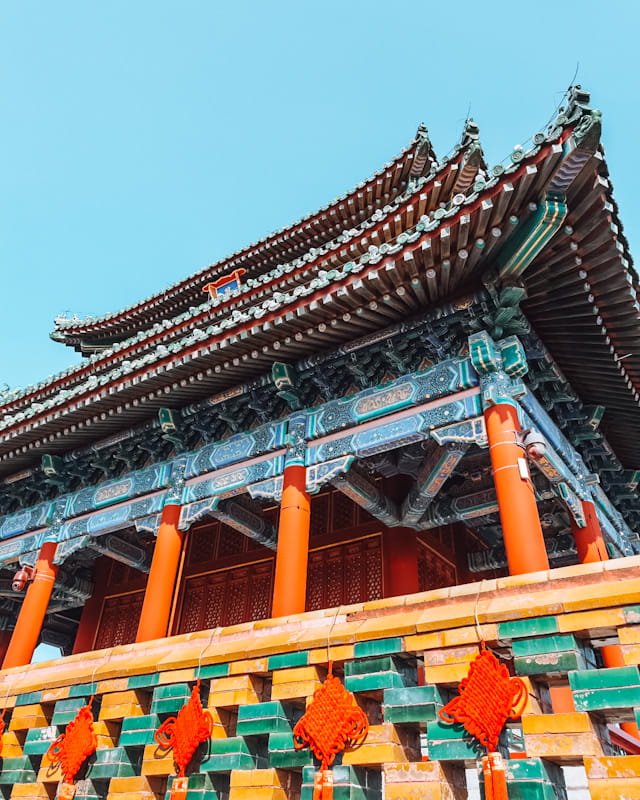
Essential Apps & Digital Tools For Travelling In China
China is one of the most digitally streamlined countries in the world, and having the right apps makes your trip dramatically smoother. Many everyday services from payments to navigation run through local platforms, so setting things up before you arrive saves a lot of stress.
- Airalo: Staying connected in China is essential, not just for maps, but because payments, QR codes, translations, and transport all rely on data. Activate before you fly for instant data on arrival.
- Alipay: Widely accepted mobile payments, supports international cards, + a great backup if WeChat glitches.
- Baidu Maps or Amap (Gaode): Reliable navigation (Google Maps doesn’t always work properly) and great for accurate metro and bus routes.
- Didi: China’s version of Uber and an English interface is available.
- Translate Apps: WeChat has a built‑in translator. Use Google Translate or Apple Translate for photo and text translation.
- VPN: A VPN lets you access familiar Western apps (WhatsApp, Instagram, Google etc) and websites that are restricted in China. Even if you won’t use it often, having one as a backup saves a lot of frustration. Download and install it before you land, as some VPN sites are blocked inside the country.
- WeChat (Weixin): Mobile payments, messaging, QR codes, and useful for taxis, tickets, and daily services.
Getting Around Beijing
The metro is the quickest and most reliable way to move around Beijing, with clear signage and cheap fares. Taxis and Didi (China’s Uber) are easy to use, though drivers may not speak English, so it helps to have your accommodation written in Chinese characters. Many hotels also provide small cards with major sights and addresses printed in Chinese characters, perfect for showing taxi drivers or asking for directions. Walking is lovely in the hutongs, but distances between major sights can be bigger than they look on a map.
Where To Stay In Beijing
For first‑timers, Dongcheng is ideal for sightseeing and easy access to major attractions. Chaoyang suits travellers who want cafes, nightlife, and a more modern feel. Hutong areas, especially those around Nanluoguxiang, Wudaoying, and the quieter lanes near Shichahai, offer a slower pace, traditional courtyard architecture, and great walkability. These neighbourhoods are perfect for travellers who want to experience everyday Beijing life, think tiny noodle shops, indie boutiques, teahouses, and photo‑worthy alleyways that feel worlds away from the city’s skyscrapers.
Book your accommodation: Compare hotels, guesthouses, and hostels across all budgets. Browse on Booking.com or check Agoda which sometimes has more options for Asia‑based stays.
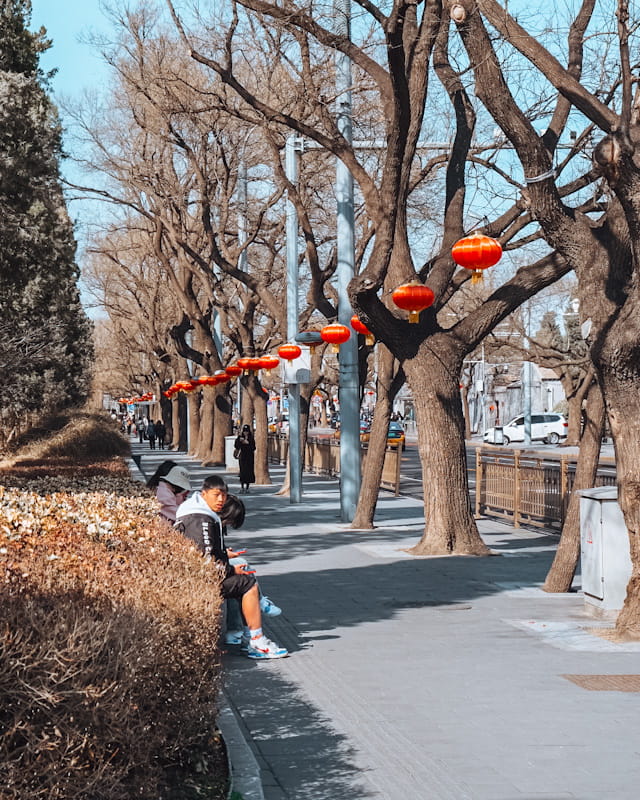
Top Things To Do In Beijing
Forbidden City
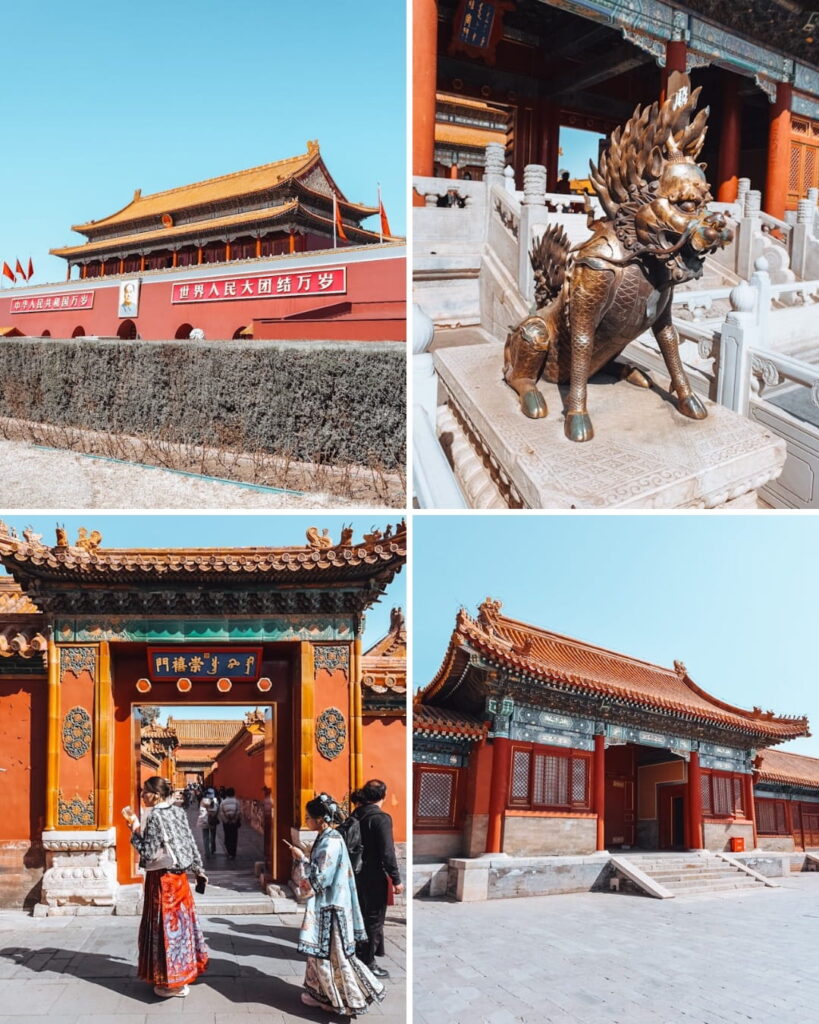
Once the home of China’s emperors, the Forbidden City served as the political and ceremonial heart of the Ming and Qing dynasties for nearly 500 years. Its vast complex of courtyards, grand halls, and intricate details reflects the height of imperial architecture and tradition. Pre‑booking is essential, and most travellers spend 2–3 hours exploring at a comfortable pace.
Tips for visiting:
- Avoid Mondays, as the Forbidden City is closed.
- Arrive early to avoid crowds, especially at the Meridian Gate entrance.
- Bring your passport, it’s required for entry and ticket checks.
- Download or screenshot a map before you go; the complex is huge and signage can be limited in some areas.
- Wear comfortable shoes, the stone pathways and large courtyards mean lots of walking.
- Plan your exit, most visitors leave through the North Gate (Shenwumen), which is a different location from where you enter.
- Consider combining it with Jingshan Park, directly opposite the north exit, for the classic panoramic view over the palace rooftops.
Explore and book my handpicked tours and activities through my GetYourGuide Shop.
Great Wall (Mutianyu)
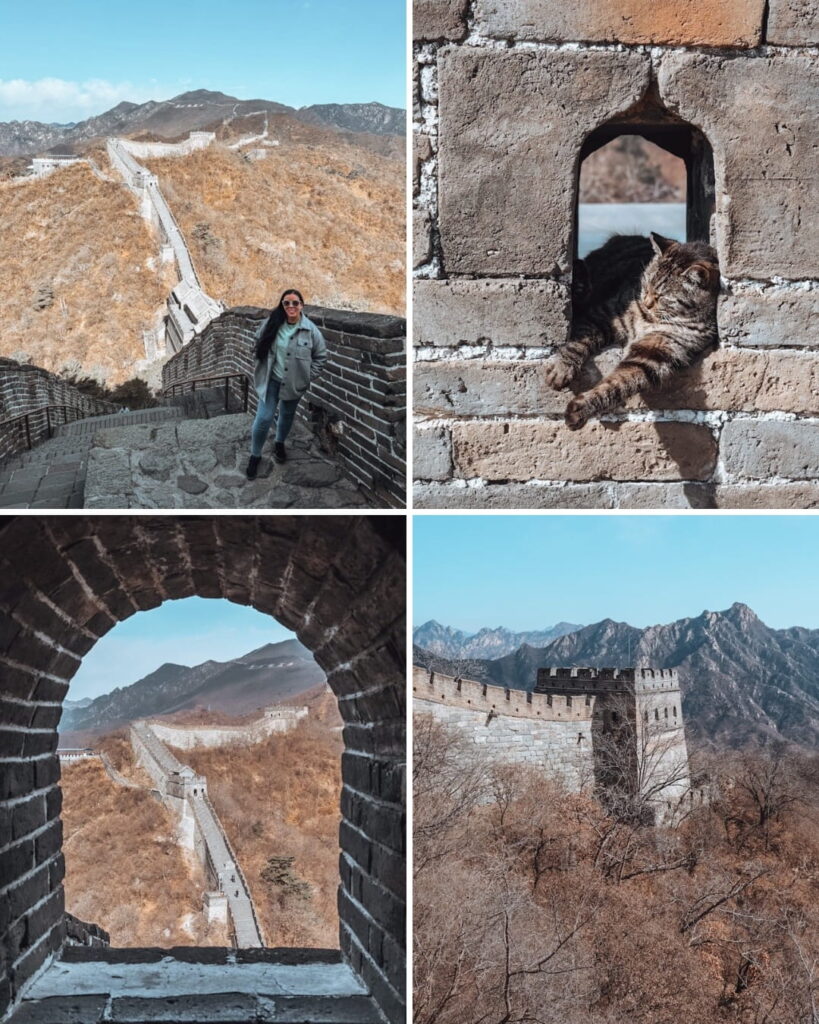
Originally built during the Northern Qi Dynasty (6th century) and later reinforced by the Ming Dynasty, Mutianyu is one of the best‑preserved sections of the Great Wall. Its watchtowers, mountain ridgelines, and restored pathways showcase both the defensive strategy and craftsmanship of imperial China. The most beginner‑friendly section of the Wall, it’s known for its sweeping views, easy navigation, and family‑friendly features. It’s less crowded than Badaling, has a cable car and a toboggan ride, and offers a great balance of scenery, history, and adventure. Even if you’re not a big hiker, this section makes the Great Wall feel accessible and fun.
Tips for visiting:
- Allow at least 4-5 hours for the round‑trip visit, including transport up and down.
- Go early to enjoy cooler temperatures and quieter paths.
- Weekdays are calmer than weekends and public holidays.
- Bring layers, the weather can change quickly, and it’s often windier at the top.
- Wear comfortable shoes, even if you plan to take the cable car, as the steps can be steep and uneven.
- Pre‑book transport or join a small group tour if you want a stress‑free journey from Beijing.
Watch: Great Wall Mini Vlog
You may also find this blog post helpful: The Great Wall Of China: A Complete Travel Guide
Hutongs
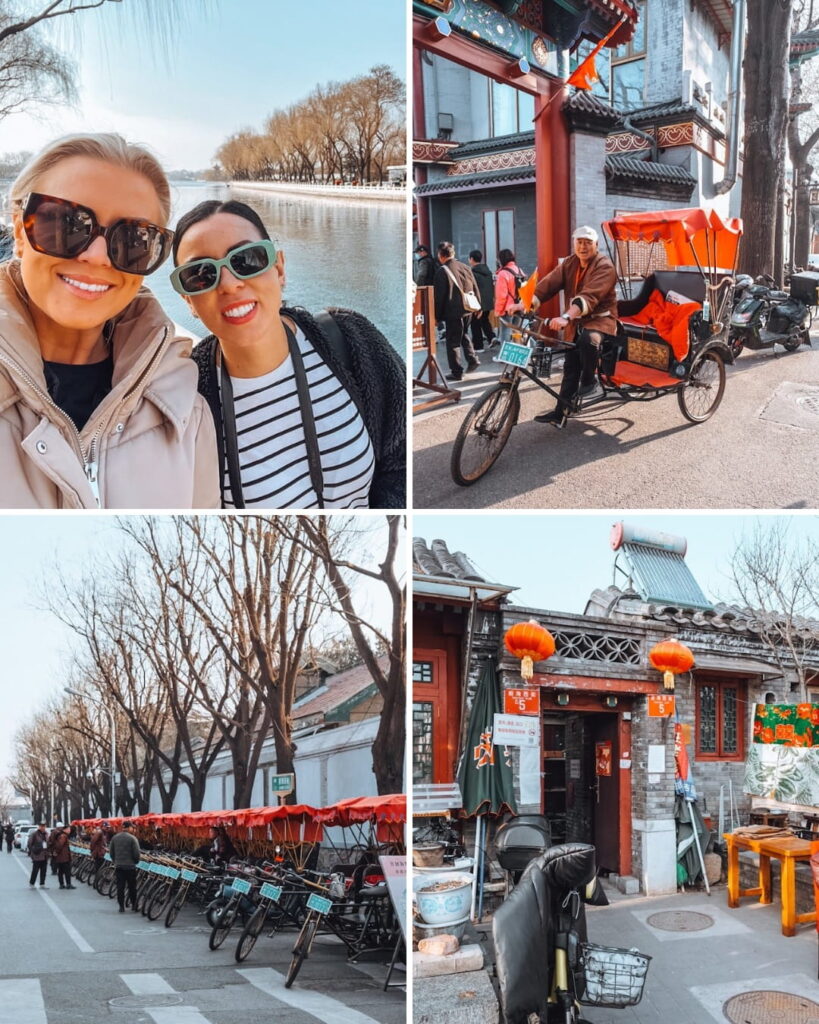
These narrow alleyways date back to the Yuan, Ming, and Qing dynasties and were once the backbone of old Beijing’s neighbourhood layout. Built around traditional siheyuan courtyard homes, they reflect centuries of everyday life and community culture. Today, many hutongs are lined with cafes, boutiques, and small shops, making them perfect for slow wandering and photography. Top areas include Wudaoying Hutong, lively Nanluoguxiang, and the quieter lanes around Shichahai and Yandai Xiejie. A relaxed rickshaw ride can also take you past traditional homes, offering a glimpse into how families have lived here for generations.
Tips for visiting:
- Stay aware of bikes and scooters, which zip through the alleys quietly.
- Go early or late afternoon for the best light and fewer crowds.
- Bring cash or WeChat Pay, as some small shops don’t accept cards.
- Look for hidden courtyards, tiny teahouses, and local snack stalls.
Jingshan Park
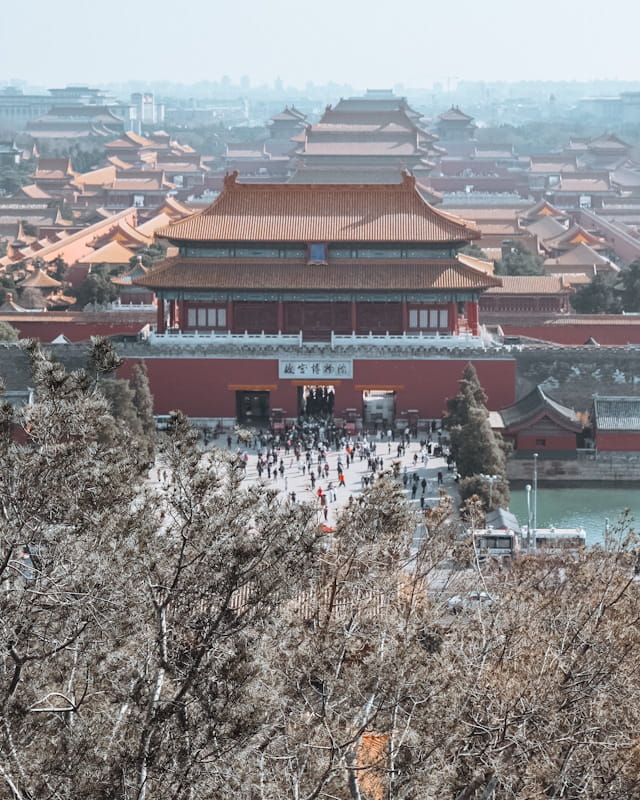
Jingshan Park is a peaceful hilltop garden just north of the Forbidden City, known for its winding paths, historic pavilions, and one of the best panoramic viewpoints in Beijing. The short climb to the top of Jingshan Hill rewards you with a view of the Forbidden City’s golden rooftops, the Drum and Bell Towers, and (on clear days) the modern skyline in the distance.
It’s a favourite spot for sunrise and sunset, but it’s also lovely during the day when locals gather to practise tai chi, sing in informal choirs, or play traditional instruments. The park offers a calm contrast to the busy Forbidden City, making it an ideal place to unwind after your visit.
Tips for visiting:
- Exit the Forbidden City through the north gate and walk straight into Jingshan Park.
- Go early or late afternoon for the best light and cooler temperatures.
- Bring a light layer, as it can be breezy at the top of the hill.
- Wear comfortable shoes, the climb is short but involves a steady incline.
- Have your camera ready for the classic panoramic shot over the Forbidden City.
- Explore the side paths, not just the main route, they’re quieter and offer lovely garden views.
- Visit on a clear‑air day if possible; the panorama is much more impressive when visibility is good.
- Combine it with Beihai Park, just a short walk away, if you want to continue the peaceful garden vibe.
Lama Temple
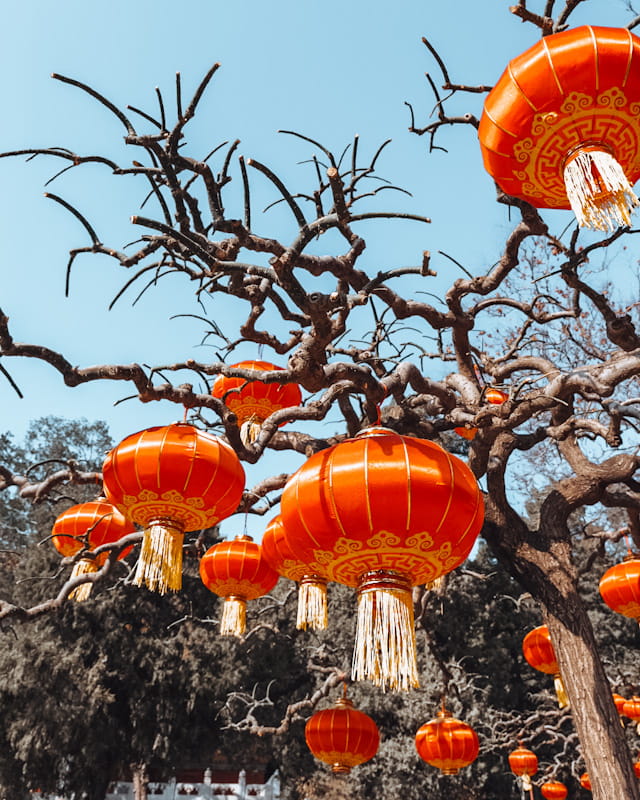
A colourful Tibetan Buddhist temple filled with incense, prayer wheels, and one of the world’s tallest wooden Buddha statues. The Lama Temple (Yonghe Temple) is calm, and easy to visit thanks to its central location.
As you wander through its series of courtyards, you’ll pass monks in saffron robes, locals offering incense, and beautifully carved halls that blend Han Chinese and Tibetan architectural styles. The highlight is the 18‑metre Maitreya Buddha, carved from a single piece of sandalwood.
Tips for visiting:
- Avoid peak weekends, as it’s a popular spot for both locals and tourists.
- Buy incense at the entrance if you’d like to take part in the traditional offering.
- Dress modestly and move slowly through the halls to respect worshippers.
- Look for the prayer wheels along the walkways, you’re welcome to spin them gently as you pass.
- Pair it with nearby Wudaoying Hutong, just a short walk away, for cafes, boutiques, and a relaxed post‑temple wander.
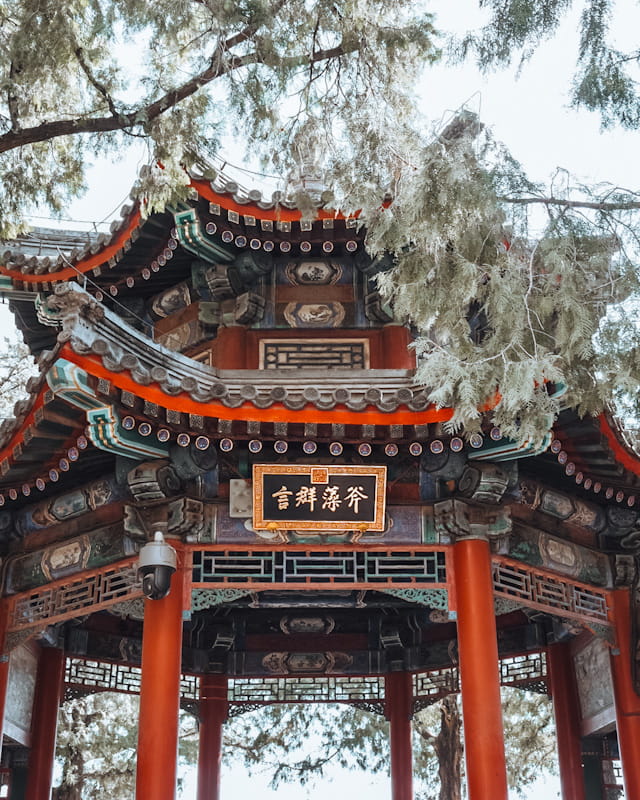
Summer Palace
A lakeside retreat once used by emperors to escape the summer heat, the Summer Palace has gardens, pavilions, temples, and shaded walkways wrapped around the tranquil Kunming Lake. It’s one of the most scenic places in Beijing, perfect for a slower morning or afternoon when you want a break from the city’s intensity.
As you wander, you’ll find ornate bridges, willow‑lined paths, and beautifully painted corridors. The Long Corridor, with its colourful beams and lakeside views, is a highlight, as is the climb up to the Tower of Buddhist Incense for sweeping panoramas. If you want something extra relaxing, you can even take a dragon boat ride across the lake when the weather is warm.
Tips for visiting:
- Pair it with the nearby Old Summer Palace (Yuanmingyuan) if you’re interested in history and don’t mind a longer day.
- Allow 2–3 hours to explore comfortably without feeling rushed.
- Go early or late afternoon for softer light and cooler temperatures.
- Wear comfortable shoes, as paths can be uneven and distances longer than expected.
- Bring water and snacks, especially in summer, as vendors inside the park can be limited.
Explore and book my handpicked tours and activities through my GetYourGuide Shop.
Temple of Heaven
A beautiful circular temple set inside a peaceful, expansive park, the Temple of Heaven is one of Beijing’s most atmospheric places to wander. The main hall – the Hall of Prayer for Good Harvests, is instantly recognisable with its deep blue tiles and intricate painted details.
Go early and you’ll see the park come alive with locals practising tai chi, ballroom dancing, calligraphy with water brushes, and traditional games like shuttlecock kicking. It’s one of the best places in the city to witness everyday community life.
The temple complex is spread out, with long walkways, ancient cypress trees, and smaller halls that are easy to explore without feeling rushed. It’s a lovely contrast to Beijing’s busier attractions and is perfect for a calm morning activity before exploring the city.
Tips for visiting:
- Pair it with nearby Pearl Market or the Red Theatre if you want to continue exploring the area afterwards.
- Arrive before 9am for the most authentic local atmosphere.
- Wear comfortable shoes, as the park is larger than it looks.
- Bring a camera, especially if you enjoy candid street‑style photography.
Tiananmen Square
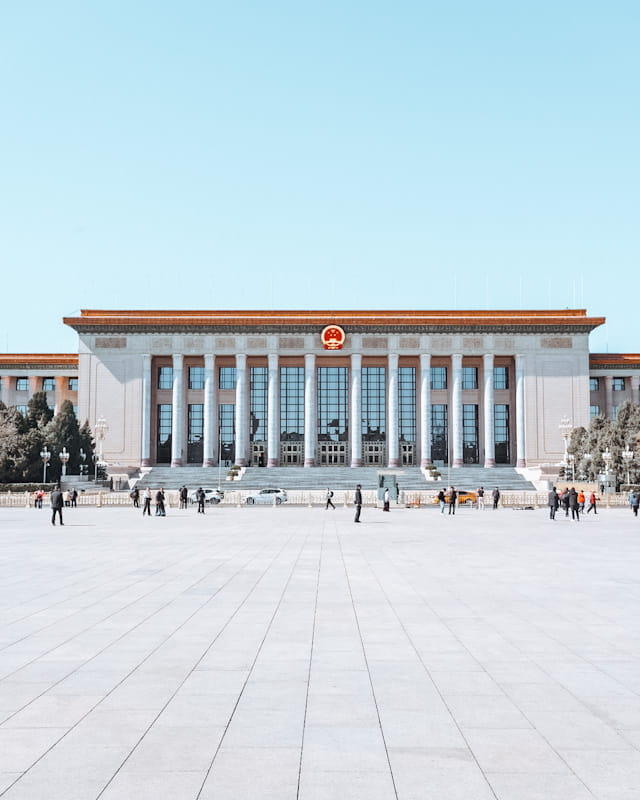
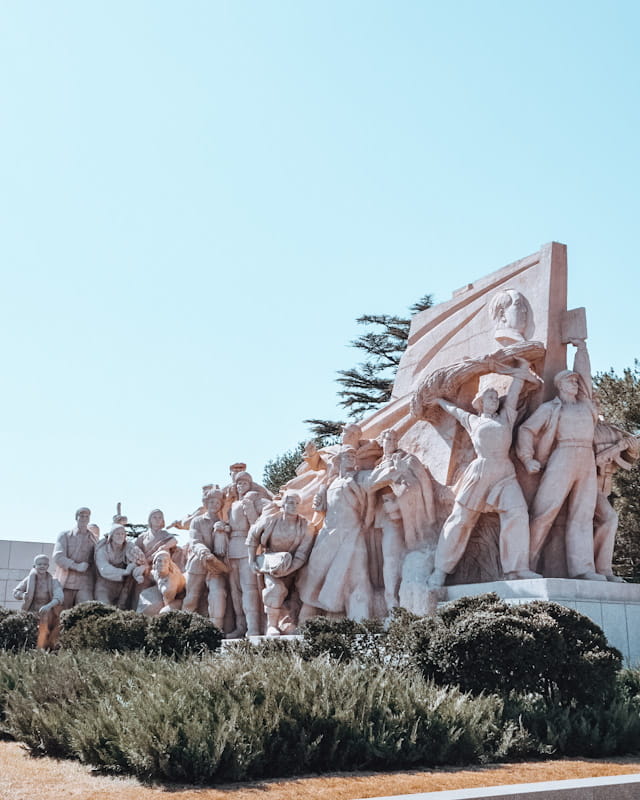
One of the largest public squares in the world, Tiananmen Square is a vast, symbolic space at the heart of Beijing and an important starting point for understanding the city’s political and cultural history. Surrounded by major landmarks, including the National Museum of China, the Great Hall of the People, and the Monument to the People’s Heroes. It’s a place where national ceremonies, daily flag‑raising rituals, and large gatherings take place.
Expect airport‑style security checks, ID requirements, and crowds, especially around sunrise and sunset when visitors gather for the flag ceremonies. The square itself is open and exposed, so visits tend to be brief, but it’s a meaningful stop before heading into the Forbidden City, which sits just across Chang’an Avenue.
Tips for visiting:
- Pair it with the Forbidden City, since they are directly connected and easy to visit in one morning.
- Bring your passport, as it’s often required for entry.
- Arrive early if you want to see the flag‑raising ceremony.
- Be mindful of photography rules, especially near security points.
Other sights in Beijing
If you have more time, these spots are also worth adding to your itinerary:
- Beihai Park: A large lakeside park with temples, pavilions, and peaceful walking paths. It’s a lovely place to unwind, and you can rent a boat on the lake when the weather is good.
- Beijing Ancient Observatory: One of the world’s oldest observatories, featuring Ming‑era instruments and a peaceful rooftop view over the city.
- Bell Tower and Drum Tower: Two historic towers overlooking the hutongs, once used to keep time for the city. You can climb both for views over the rooftops and catch the traditional drum performance if the timing lines up.
- Confucius Temple and Imperial College: A calm cultural stop where scholars once studied. Expect quiet courtyards, ancient cypress trees, and beautiful stone carvings that offer a break from the city’s pace.
- Houhai: A lively lake area surrounded by cafes, bars, and hutong lanes. Great for an afternoon stroll, people‑watching, or a relaxed evening by the water.
- Jingyiyuan: A peaceful, mountainous park with scenic trails and viewpoints. Ideal if you want fresh air and nature without leaving the city completely.
- Red Theatre (Kung Fu Show): An evening performance showcasing Chinese martial arts, acrobatics, and storytelling. It’s touristy but entertaining, and a great option if you want a cultural show that’s easy to follow without Mandarin.
- Yuanmingyuan Park (Old Summer Palace): Atmospheric ruins of former imperial palaces, now surrounded by lakes and gardens. It’s a spacious, quiet place to wander and imagine what once stood there.
- 798 Art District: A trendy creative zone filled with galleries, murals, modern art, cafes, and design shops – a more contemporary side of Beijing.
Easy day trips from Beijing
- The Great Wall (Mutianyu or Jinshanling): Iconic and unmissable. Mutianyu is well‑restored and easy to access, while Jinshanling offers quieter trails and mountain views.
- Summer Palace: A lakeside retreat of temples, pavilions, and gardens. Perfect for slow wandering, boat rides, and escaping the city’s pace.
- Ming Dynasty Tombs: A collection of imperial mausoleums set in a quiet valley outside Beijing. The Sacred Way and surrounding scenery make it a calm half‑day trip.
- Gubei Water Town & Simatai Great Wall: A rebuilt water town at the base of Simatai. Visit in the late afternoon and stay for the illuminated night walk on the Wall.
- Chengde Mountain Resort: A former imperial summer retreat with palaces, lakes, and temples. It’s a longer day trip, but full of history and worth the journey.
- Cuandixia Village: A preserved Ming‑era mountain village with stone houses, narrow lanes, and scenic hiking paths. Its great for a slow rural escape.
Explore and book my handpicked tours and activities through my GetYourGuide Shop.
Eating In Beijing
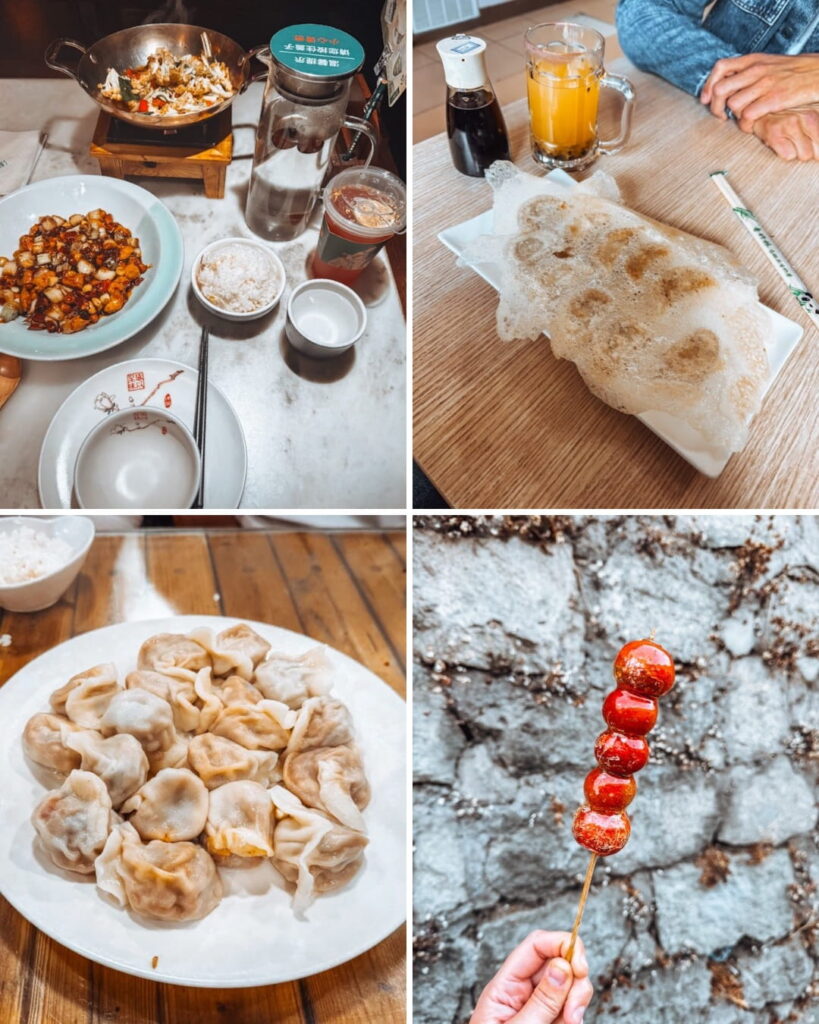
Beijing’s food scene is diverse and full of classics worth trying. Popular dishes include jiaozi (dumplings), hand‑pulled noodles, jianbing (a breakfast crepe), Peking duck, hotpot, mantou (steamed buns), zha jiang mian (noodles with soybean sauce), and simple favourites like tomato and egg. You’ll also see plenty of street snacks such as candied hawthorns and spring pancakes.
For street food, head to areas like Wangfujing, Nanluoguxiang, Ghost Street (Guijie), Jiumen Snack Street, or Niujie Muslim Snack Street – all offer a mix of stalls and small restaurants with high turnover. Fucheng Road is another popular foodie spot, known for its mix of neighbourhood eateries and modern shopping spots. Many places use QR‑code menus and may not have English translations, so a translation app helps a lot. Street food is generally affordable and safe when you choose busy stalls.
Vegetarians should try Baihe Vegetarian Restaurant (my favourite restaurant I have been to in Beijing), a cosy courtyard spot near Lama Temple with creative dishes and an English menu. It’s a great option in a city where meat-heavy menus are common.
Explore and book my handpicked tours and activities through my GetYourGuide Shop.
3‑Day Beijing Itinerary
This is an easy, realistic and rough plan for first‑timers, not rushed, nothing complicated, just the highlights in a way that makes sense if you’re new to the city.
Day 1: Tiananmen Square, Forbidden City, and Jingshan Park
Start at Tiananmen Square, then head straight into the Forbidden City (pre‑booking is essential). After exploring the palace grounds, walk over to Jingshan Park and climb the short hill for the best panoramic view of the city. It’s a great way to get your bearings and ease into Beijing’s history.
Day 2: The Great Wall (Mutianyu) and The Summer Palace
Dedicate a full day to the Great Wall. Mutianyu is the most beginner‑friendly section, it’s less crowded, easy to navigate, and has a cable car if you want to avoid the steep climb. It’s the perfect mix of scenery, history, and a bit of adventure without feeling too intense. If you don’t want to spend the whole day at the The Great Wall, you can shorten your visit and stop at the Summer Palace on the way back to the city, as it’s on the outskirts of Beijing and is on the same route.
Day 3: Temple of Heaven and Hutongs
Start your morning at the Temple of Heaven, where you’ll often see locals practising tai chi or dancing in the park. From there, head into the hutongs for a slow wander, coffee stops, and a look at traditional courtyard life. Finish the day at a food street like Wangfujing or Nanluoguxiang for snacks, dumplings, and an easy dinner.
Find planning tools, digital guides, and travel must‑haves in the Pretty Planet Shop. Browse my Amazon Storefront for the best travel gadgets and accessories for your next trip.
You may also find these other blog posts helpful:
- Shanghai City Guide: What To See, Eat, & Explore
- The Great Wall Of China: A Complete Travel Guide
- The Jet Lag Survival Guide: Essential Tips For Travellers
Thanks for reading! If you enjoyed this post, feel free to comment, subscribe, or follow along on socials for more travel inspo. Some links may be affiliate at no extra cost to you, helping support Pretty Planet and keep the free advice flowing. If you found this helpful, and would like to support this little corner of the internet you can do so here. Your support means the world. Happy travelling!



Leave a Reply