Shanghai is a city I’ve visited regularly over the years during my cabin crew layovers, and each trip gave me the chance to explore a different corner of it. It’s an incredible place, but travelling in China can feel a little complex at first, from digital‑only payments and language barriers to apps that work differently and the need for a VPN. Once you understand those basics though, Shanghai becomes surprisingly easy to navigate, with efficient transport, amazing food, and a futuristic skyline. This guide keeps everything simple so first-timers can explore with confidence rather than feeling overwhelmed.
This post contains affiliate links. If you book or buy through them, I may earn a small commission at no extra cost to you, which helps keep this blog running. You can read how your data is handled in the privacy policy. If you found this helpful, and would like to support this little corner of the internet you can do so here.
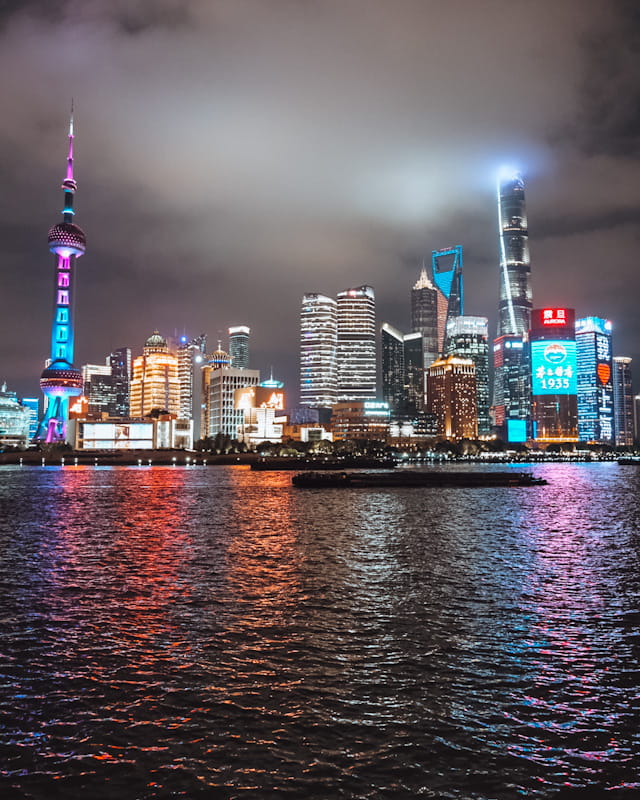
- Best Time To Visit: Spring (April–May) and autumn (September–October) offer the best weather and clearer skies.
- Currency & Payments: Chinese Yuan (¥ RMB). Cards aren’t widely accepted. WeChat Pay and Alipay are most common, but many travellers now use international cards through these apps. It’s still best to carry a little cash for street food, markets, and small purchases.
- Daily Budget: For current cost estimates, check Budget Your Trip, which updates prices regularly based on real traveller data.
- Getting Around: The metro is fast, cheap, and easy. Taxis and Didi are widely available. Walking is great in neighborhoods such as Tianzifang and Xintiandi.
- Language Tips: English is limited. Download a translation app and keep key phrases or addresses written in Chinese characters.
- Useful Apps & VPN: WeChat, Alipay, Didi, Baidu Maps, and Google Translate. Many Western apps are blocked, download a VPN before arrival.
- Visa & Entry Requirements: Visa rules vary by nationality. Travellers who are not UK citizens should check their own government’s official travel advisories for the most accurate guidance. For the most up‑to‑date information for UK travellers, refer to the official UK Government Travel Advice.
What To Expect In Shanghai
Shanghai is sleek, stylish, and dynamic, a place where Art Deco architecture, futuristic skylines, leafy European‑influenced streets, and buzzing commercial districts all coexist. It’s a safe, efficient, and highly modern city, but the fast pace, dense crowds, digital‑first systems, and occasional language barriers can surprise first‑time visitors. China leans heavily on its own apps, so payments, maps, and communication work differently, and many Western apps require a VPN.
Once you’re set up with WeChat, Alipay, translation tools, and the metro system, everything becomes easy. Expect bag checks at stations, carry your passport for hotel registration, download key apps before you arrive, and keep an eye on air quality.
Carry a small amount of cash for taxis, small purchases, and street vendors, although most locals rely almost entirely on mobile payments. Some places accept international cards, but the majority of transactions are still expected to be made through WeChat Pay or Alipay.
Most public museums and historical sites across China follow a nationwide Monday closure policy (so always double-check opening hours before you visit). These closures allow for staff training, deep cleaning, and artefact care, but they also mean that attractions which remain open on Mondays, such as parks, private museums etc tend to be busier as visitors adjust their plans. If you’re visiting popular attractions on a Monday, aim to arrive earlier in the day to enjoy them before the crowds build.
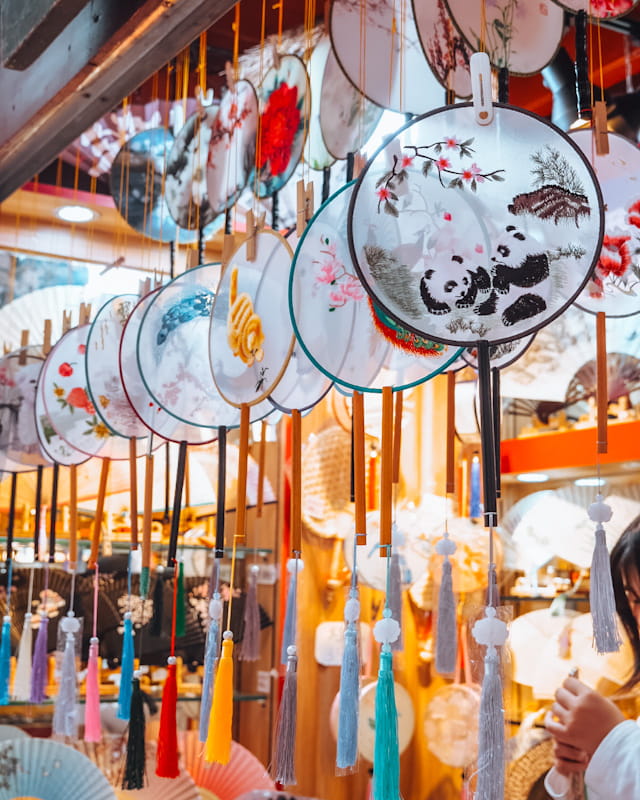
Essential Apps & Digital Tools For Travelling In China
China is one of the most digitally streamlined countries in the world, and having the right apps makes your trip dramatically smoother. Many everyday services from payments to navigation run through local platforms, so setting things up before you arrive saves a lot of stress.
- Airalo: Staying connected in China is essential, not just for maps, but because payments, QR codes, translations, and transport all rely on data. Activate before you fly for instant data on arrival.
- Alipay: Widely accepted mobile payments, supports international cards, + a great backup if WeChat glitches.
- Baidu Maps or Amap (Gaode): Reliable navigation (Google Maps doesn’t always work properly) and great for accurate metro and bus routes.
- Didi: China’s version of Uber and an English interface is available.
- Translate Apps: WeChat has a built‑in translator. Use Google Translate or Apple Translate for photo and text translation.
- VPN: A VPN lets you access familiar Western apps (WhatsApp, Instagram, Google etc) and websites that are restricted in China. Even if you won’t use it often, having one as a backup saves a lot of frustration. Download and install it before you land, as some VPN sites are blocked inside the country.
- WeChat (Weixin): Mobile payments, messaging, QR codes, and useful for taxis, tickets, and daily services.
Getting Around Shanghai
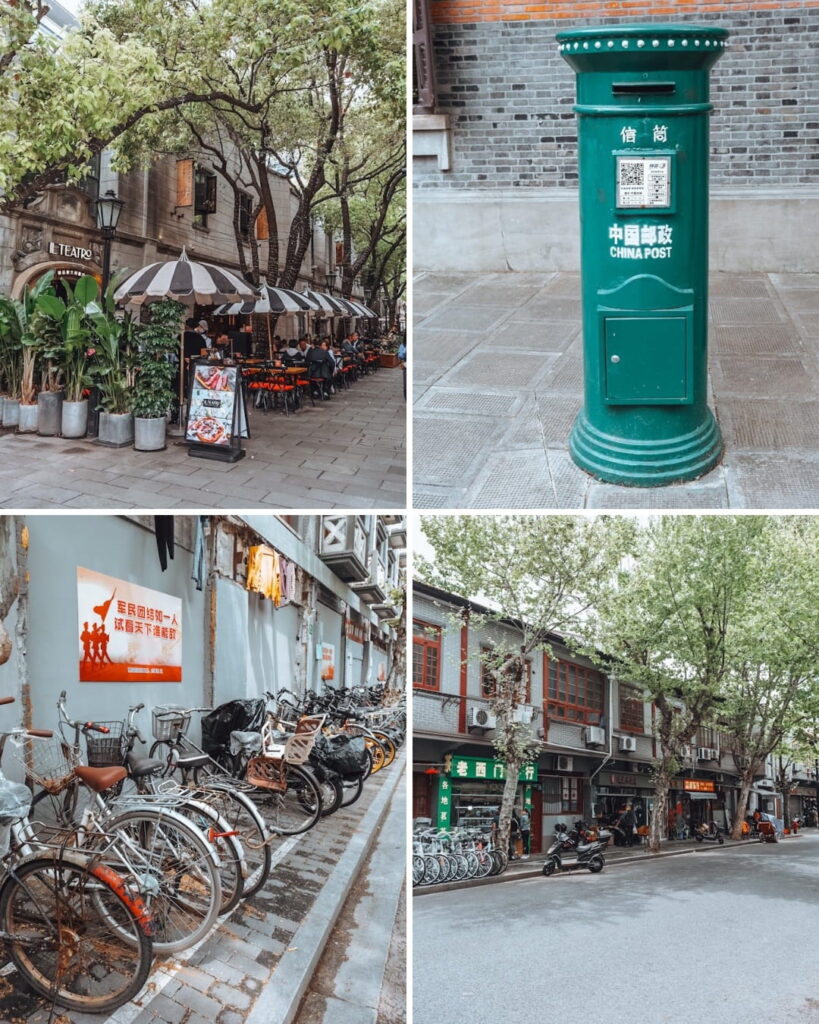
The metro is the quickest and most reliable way to move around Shanghai, with clear signage and cheap fares. Taxis and Didi (China’s Uber) are easy to use, though drivers may not speak English, so it helps to have your accommodation written in Chinese characters. Many hotels also provide small cards with major sights and addresses printed in Chinese characters, perfect for showing taxi drivers or asking for directions. Walking is lovely in neighbourhoods like the French Concession, but distances between major attractions, especially across the river between Puxi and Pudong can be longer than they appear on a map.
Maglev Train
Shanghai’s Maglev is one of the fastest commercial trains in the world and a fun, ultra‑quick way to travel between Pudong International Airport (PVG) and Longyang Road Station. It covers the 19‑mile route in just 7-8 minutes, reaching 186–267 mph depending on the time of day. Trains run every 15-20 minutes, tickets are easy to buy with cash or card, and there’s plenty of room for luggage. At Longyang Road, you can transfer directly to Metro Line 2, Line 7, or Line 16 to continue into central Shanghai. It’s especially worthwhile if you’re landing at Pudong International Airport (PVG) and want the fastest, smoothest ride into the city. I loved doing this and can confirm it’s absolutely worth doing at least once for the experience.
Where To Stay In Shanghai
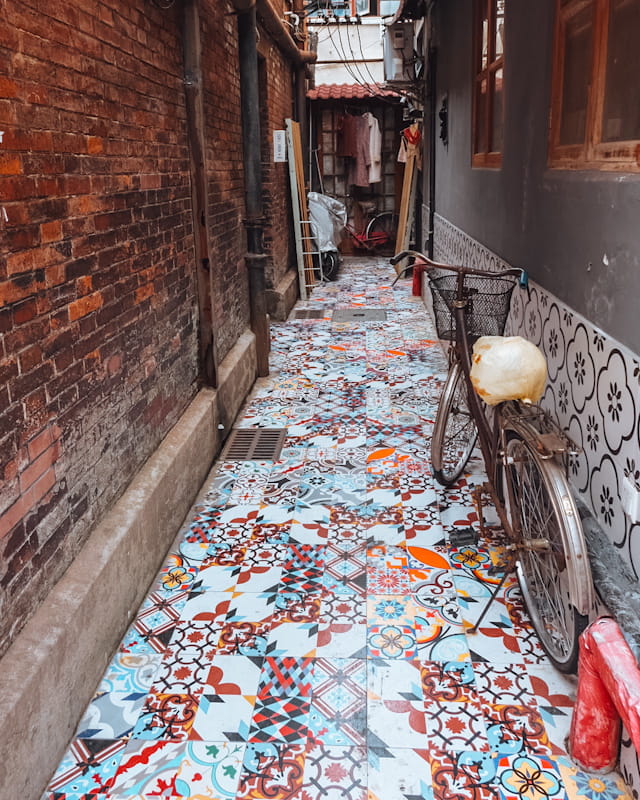
For first‑timers, the Bund and People’s Square areas are ideal for sightseeing and quick access to major attractions. The Former French Concession suits travellers who want leafy streets, cafes, boutiques, and a relaxed, creative vibe. Neighbourhoods like Xintiandi, Tianzifang, and the quieter residential lanes of the French Concession offer a slower pace, shikumen architecture, and great walkability. These areas are perfect for travellers who want to experience everyday Shanghai life – think tiny noodle shops, indie boutiques, teahouses, and photogenic alleyways that feel worlds away from the city’s futuristic skyline.
Book your accommodation: Compare hotels, guesthouses, and hostels across all budgets. Browse on Booking.com or check Agoda which sometimes has more options for Asia‑based stays.
Top Things To Do In Shanghai
French Concession
The French Concession is a district, known for its leafy boulevards, European‑style villas, and relaxed cafe culture. Wandering through its quiet residential lanes you will see historic architecture, boutique shops, art galleries, and stylish restaurants. It’s a great place to slow down, explore at your own pace, and soak up a softer, more romantic side of the city. The French Concession offers a peaceful contrast to Shanghai’s futuristic skyline. Fuxing Park is a peaceful green space in the heart of the French Concession, known for its tree‑lined paths, rose gardens, and lively local culture. You’ll see people dancing, playing cards, practising tai chi, and enjoying the calm.
Just a short walk away, Xintiandi brings a more polished, modern energy. With restored Shikumen houses, it blends heritage architecture with upscale dining, stylish cafes, and boutique shopping. It’s especially lovely in the evenings when lanterns glow and terraces fill with people. Explore both Xintiandi’s north and south blocks for different vibes. Expect higher prices in Xintiandi as it’s one of Shanghai’s premium dining areas.
Tips for visiting:
- Explore on foot, the small lanes are the best part of this neighbourhood.
- Stop at a cafe or bakery, this area is known for great coffee.
- Visit Fuxing Park for a glimpse of local life and morning tai chi.
- Combine it with Tianzifang and Xintiandi, which are both nearby.
Explore and book my handpicked tours and activities through my GetYourGuide Shop.
Jing’an Temple
Jing’an Temple is a golden sanctuary set right in the middle of a busy commercial district. The temple’s gilded roofs, towering incense burner, and beautifully carved halls create a striking contrast with the surrounding skyscrapers. It’s a place where old Shanghai and modern Shanghai sit side by side.
Tips for visiting:
- Pair it with a walk to Jing’an Park for a peaceful break.
- Visit in the morning for softer light and fewer crowds.
- Explore the surrounding area, Jing’an is full of cafes and boutiques.
- Take time to observe local rituals around the incense burner.


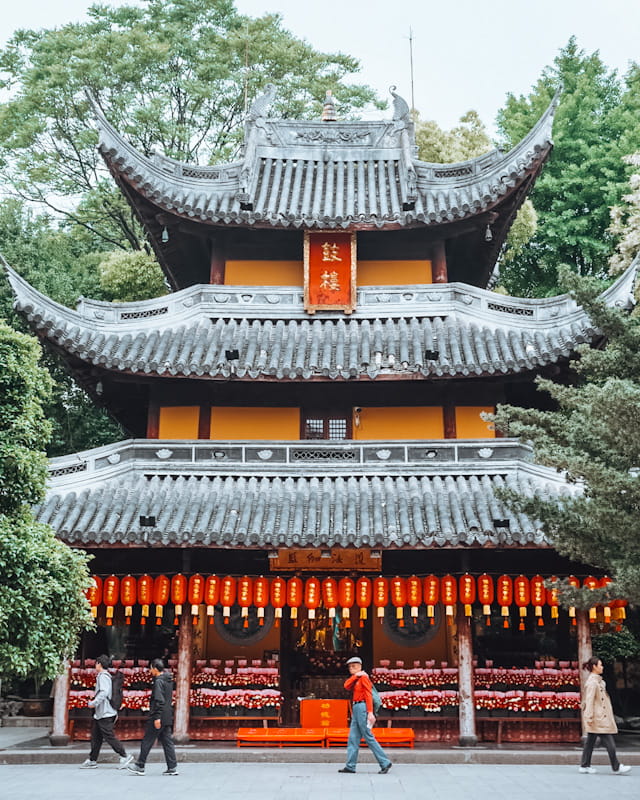
Longhua Temple
Longhua Temple is the oldest and largest monastery in Shanghai and feels like a retreat from the city. It’s far less crowded than the central temples, making it an ideal place to slow down, listen to the bells, and wander through grounds that have been part of Shanghai’s spiritual life for centuries.
Tips for visiting:
- Combine it with a visit to the nearby Longhua Martyrs’ Memorial.
- Plan extra time, the grounds are large and worth exploring slowly.
- Go on a weekday for the quietest experience.

Nanjing Road
Nanjing Road is Shanghai’s most iconic shopping boulevard, stretching from the Bund to the People’s Square. It’s a lively pedestrian‑friendly avenue lined with glowing neon signs, flagship shops, traditional snack stalls, and grand old department buildings. In the evenings, the street comes alive with illuminated signs, street performers, and a steady flow of locals and visitors.
Tips for visiting:
- Start at the Bund end then walk west toward People’s Square.
- Visit after sunset to experience the full neon glow and lively street scene.
- Try classic Shanghai snacks like shengjianbao (pan-fried steamed buns) or candied hawthorn from street vendors.
- Keep an eye on your belongings, it’s safe but very crowded.
- If you prefer quieter browsing, go earlier in the day before the evening rush.
- Combine it with a stroll along the Bund for a perfect contrast between historic waterfront and modern shopping avenue.
Explore and book my handpicked tours and activities through my GetYourGuide Shop.


People’s Square
People’s Square is a spacious urban parkland at the centre of Shanghai, known for its broad walkways, gardens, and the steady flow of daily life that moves through it. It is surrounded by cultural landmarks like the Shanghai Museum and the Grand Theatre. Visit in the morning to see locals practise tai chi or stroll through the gardens in the late afternoon when the square fills with families, students, and commuters.
Tips for visiting:
- Combine your visit with the Shanghai Museum, which sits right on the square and is free to enter.
- Mornings are quieter and offer a more local feel.
- Wander toward Nanjing Road if you want to continue into Shanghai’s main pedestrian shopping street.
- Look for seasonal flower displays and public art installations around the square.

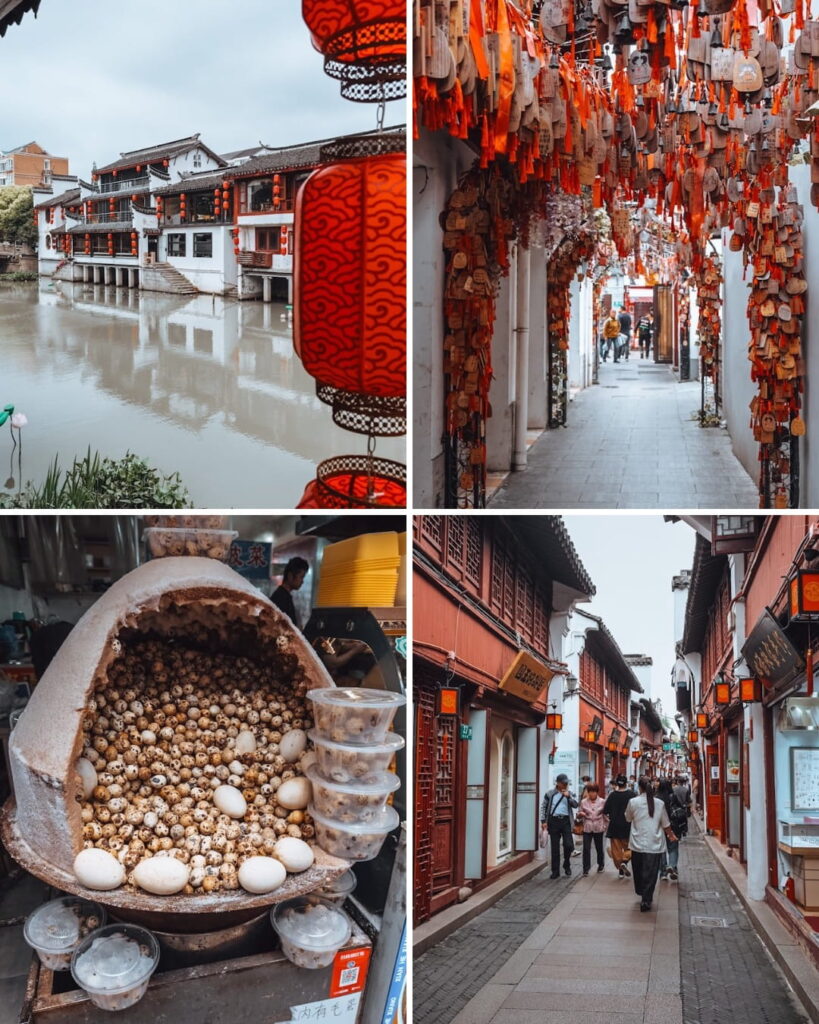
Qibao
Qibao is an ancient water town tucked within Shanghai’s suburbs, known for its narrow stone lanes, arched bridges, and canals lined with traditional houses. It offers a glimpse of old‑world Jiangnan life without needing to travel far from the city centre. The town’s lively food street is famous for its local snacks, while the quieter back alleys are full of teahouses, small museums, and canal views.
Tips for visiting:
- Go early in the morning to enjoy the canals and bridges before the crowds arrive.
- Explore beyond the main food street, the side alleys are great to explore and less busy.
- Try local specialities like sticky rice cakes or skewered snacks.
- Bring small cash for street food and small museum entry fees.
- Visit on a weekday if possible, weekends get very crowded.
- Pair it with a relaxed tea break at a canal‑side teahouse for a slower, more traditional experience.
The Bund
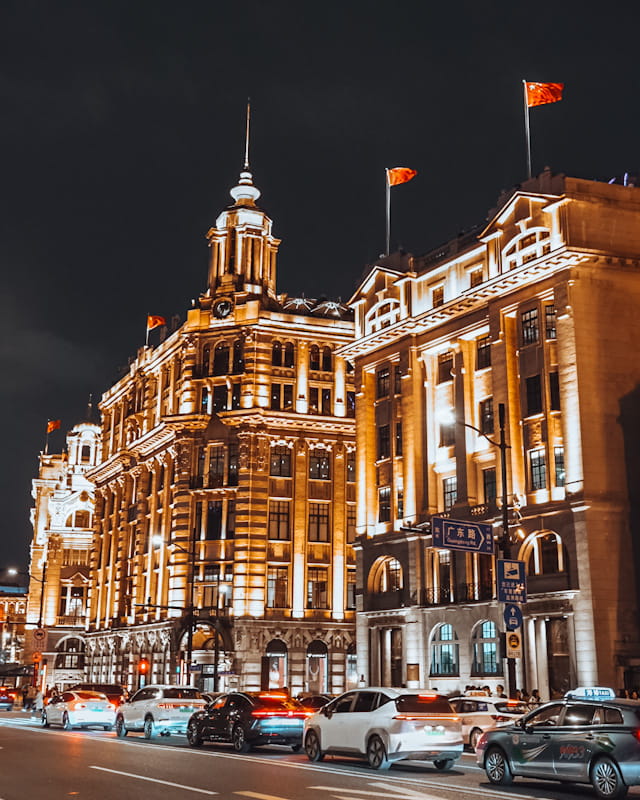
Once the iconic waterfront of colonial‑era Shanghai, the Bund showcases a row of historic European‑style buildings facing the futuristic skyline of Lujiazui. This contrast of old‑world grandeur on one side and glass‑and‑steel skyscrapers on the other, makes it one of the city’s most photographed locations. Most travellers spend time strolling the promenade, especially around sunrise, sunset and after dark when the skyline lights up.
Tips for visiting:
- Visit early morning or after 8pm for fewer crowds and the best photography conditions.
- Walk the full stretch from Waibaidu Bridge to Jinling East Road for the most iconic views.
- Bring a light jacket in cooler months, the riverside breeze can be chilly.
- For elevated views, consider visiting a rooftop bar on the Puxi side.
- Combine it with a Huangpu River cruise if you want a different perspective of the skyline.
- If you’re heading to Lujiazui afterwards, consider taking the Bund Sightseeing Tunnel. Its a quick, quirky light‑train that runs beneath the river and drops you right by the skyscrapers.
Tianzifang
One of my favourite areas in the city, it’s a maze of narrow alleyways in the former French Concession. Tianzifang is full of creative studios, boutique shops, cafes, and small galleries inside preserved Shikumen‑style buildings. It’s one of Shanghai’s best neighbourhoods (in my opinion), it’s colourful, artsy, and perfect for wandering.
Tips for visiting:
- Go on weekdays or earlier in the day to avoid the heaviest crowds.
- Bring cash or mobile payment, as some small vendors don’t accept cards.
- Look for side alleys, the best finds are often tucked away from the main lanes.
- Pair it with a walk through the leafy streets of the French Concession.
Watch: Tianzifang Mini Vlog

Yuyuan Bazaar and Old Shanghai
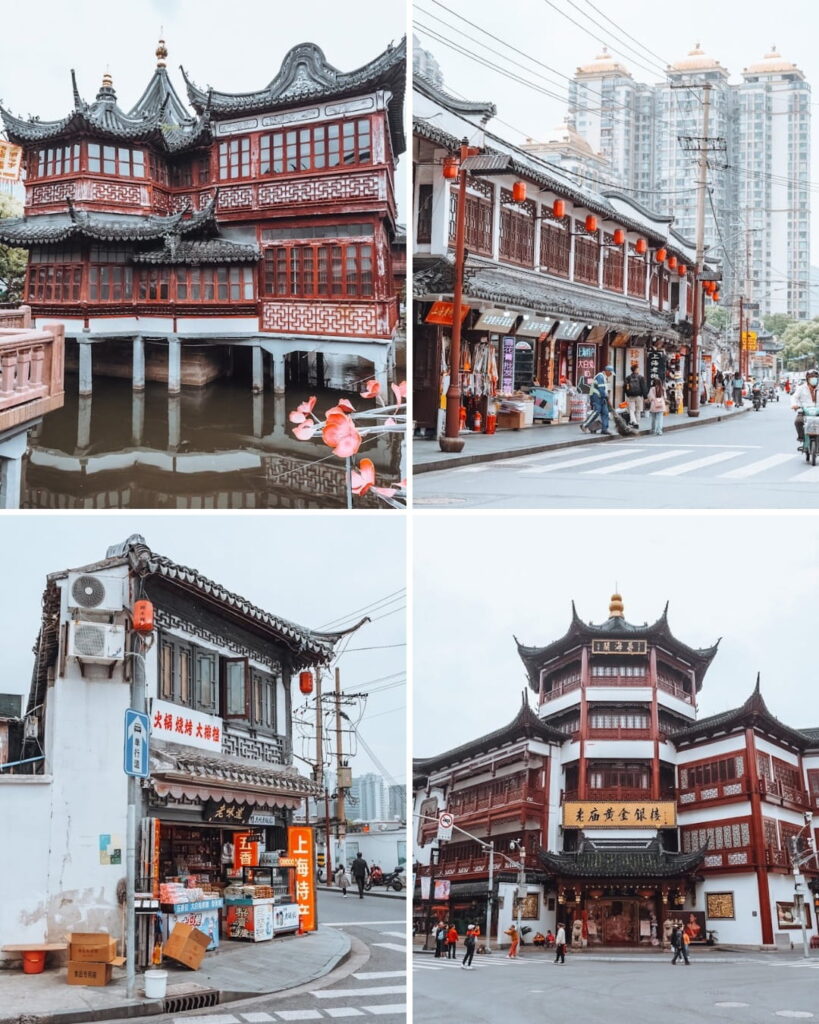
Yuyuan Bazaar is a lively district filled with traditional‑style architecture, snack stalls, tea houses, and souvenir shops. Old Shanghai is colourful and bustling even if much of it has been rebuilt. Travellers typically spend a few hours browsing, snacking, and taking photos of the ornate rooftops.
Tips for visiting:
- Visit early morning or later in the evening to avoid peak crowds.
- Try classic local snacks like xiaolongbao (steamed soup dumplings).
- Keep an eye on your belongings, it’s busy and compact.
- Combine it with Yuyuan Garden.
Explore and book my handpicked tours and activities through my GetYourGuide Shop.
Yuyuan Garden
A classical Chinese garden dating back to the Ming dynasty, Yuyuan Garden is a peaceful retreat from the surrounding bustle. Its pavilions, koi ponds, rockeries, and winding pathways create a serene atmosphere that reflects traditional Suzhou‑style.
Tips for visiting:
- Arrive early to enjoy the garden before tour groups arrive.
- Follow the suggested route, the layout is intentionally designed to reveal scenes gradually.
- Tickets are required, and lines can form during weekends and holidays.


Other sights in Shanghai
If you have more time, these spots are also worth adding to your itinerary:
- Century Park: Shanghai’s largest urban park, with lakes, gardens, and wide lawns ideal for picnics, cycling, and a quiet break from the city.
- Confucius Temple (Wen Miao): A peaceful temple with traditional courtyards and calm spaces perfect for time away from busier attractions.
- Disneyland Shanghai: A huge, modern Disney park with standout rides like TRON Lightcycle. Busy but fantastic for theme‑park lovers.
- Huangpu River Cruise: A relaxing way to see both sides of the skyline, evening cruises are especially beautiful as the Bund and Pudong light up.
- Jade Buddha Temple: A popular Buddhist temple known for its jade Buddha statues, incense‑filled courtyards, and chanting halls.
- Lujiazui (Pudong Skyline): Shanghai’s futuristic financial district, full of soaring towers and neon night views. Best experienced after dark.
- M50 Art District: A creative cluster of galleries, murals, and studios inside old factory buildings, great for modern art lovers.
- Shanghai Museum: One of China’s best free museums, with excellent collections of bronzes, ceramics, calligraphy, and traditional clothing.
- Shanghai Tower Observation Deck: China’s tallest building with sweeping city views, on clear days you can see the contrast between historic Puxi and modern Pudong.
- Suzhou Creek Riverside Walk: A calm waterfront promenade lined with art deco bridges, renovated warehouses, and cafes.
Easy day trips from Shanghai
- Suzhou: A beautiful city known for its classical gardens, canals, and traditional architecture. Highlights include the Humble Administrator’s Garden and the lanes of Pingjiang Road.
- Hangzhou: Famous for West Lake, tea plantations, and lush green scenery. It’s one of China’s most picturesque cities and perfect for a relaxing nature‑focused day.
- Zhujiajiao Water Town: A water town with stone bridges, canals, and old streets. It’s easy to reach and great for a half‑day or full‑day escape from the city.
- Wuzhen: A beautifully preserved water town with wooden houses, lantern‑lit canals, and a polished, atmospheric feel. It’s especially lovely in the late afternoon and evening.
- Nanjing: A historic city with major cultural landmarks, including the Nanjing Massacre Memorial and the Ming Xiaoling Mausoleum. It offers an educational day trip.
- Tongli Water Town: A quieter, more traditional water town known for its peaceful canals and classical gardens. It’s less commercial than other options and ideal for travellers seeking a slower pace.
Explore and book my handpicked tours and activities through my GetYourGuide Shop.
Eating In Shanghai
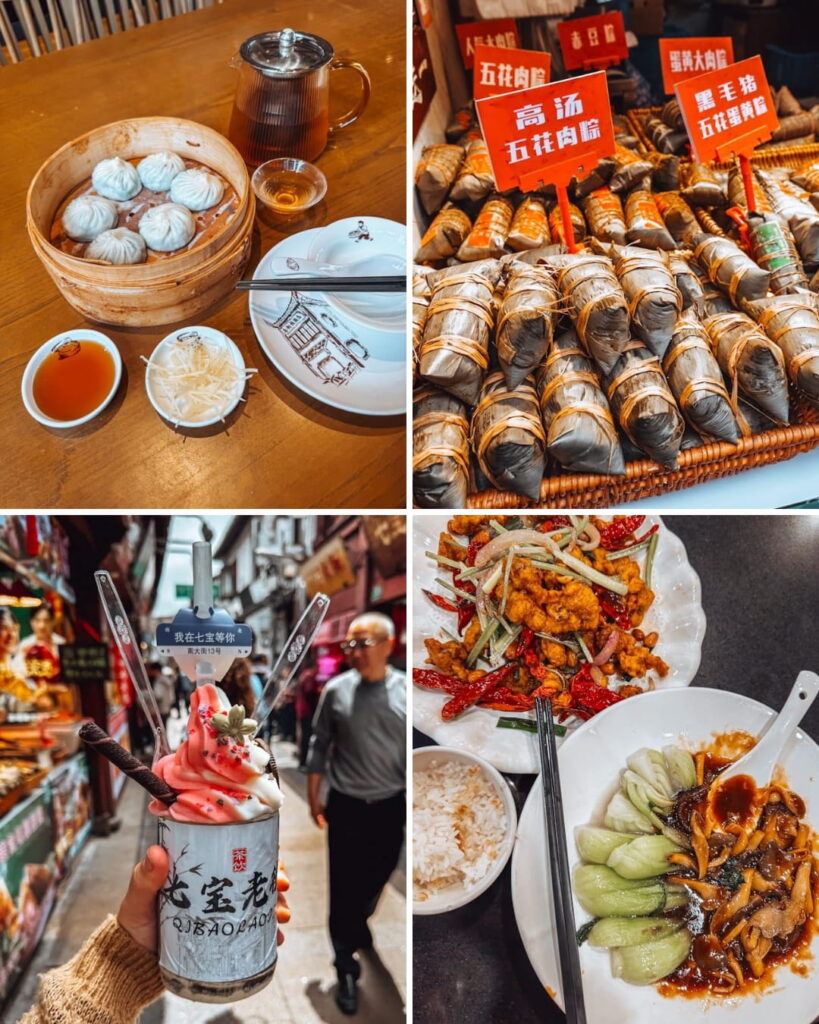
Shanghai’s cuisine reflects its location on the Yangtze and a long history of regional and Western influence. Try local Hu cuisine dishes such as hong shao (soy‑braised meats), braised pork belly, baked quail eggs, shaomai (open-topped dumplings), xiaolongbao (steamed soup dumplings), and zongzi (glutinous rice dumplings wrapped in bamboo/reed leaves).
For street food, explore lively spots such as Fangbang Road, Old Town God Temple Snack Street, South Yunnan Road, Wujiang Road, Xiangyang Road, the Friday Muslim Market on Changde Road, or the stalls near South Bund Fabric Market. These areas are full of small eateries and vendors.
Nanxiang Steamed Bun Restaurant is the classic stop for soup dumplings, expect queues or grab a quick order from the stand‑up counter. Nearby, Huxinting Tea House offers a historic tea setting, pricey but worth it for the atmosphere and a quiet break from Yuyuan Bazaar.
For a stylish dinner, Lost Heaven serves Yunnan dishes with Southeast Asian twists, conveniently located along the Bund. Shanghai Grandmother is one of my personal favourite restaurants in the city. It’s affordable and serves traditional dishes with good vegetarian options. Tianzifang is ideal for grazing, wander its alleyways for quirky snacks, cafes, and small restaurants.
No.3 Warehouse is an industrial‑futuristic riverfront restaurant serving Shanghainese flavours, making it a perfect spot for a slow, elegant meal along the Suzhou Creek.
Explore and book my handpicked tours and activities through my GetYourGuide Shop.
4‑Day Shanghai Itinerary
This is an easy, realistic and rough plan for first‑timers, not rushed, nothing complicated, just the highlights in a way that makes sense if you’re new to the city.
Day 1: Yuyuan Garden, People Square, Nanjing Road and The Bund
Start at Yuyuan Garden and the surrounding Old City. The garden is peaceful and traditional, while the bazaar area is fun for wandering, tea shops, and small bites. From there, head to People’s Square and walk back through Nanjing Road, the city’s busiest pedestrian street. It’s lively, easy to navigate, and great for snacks, people‑watching, and getting a feel for Shanghai’s energy. Finish your day at The Bund, walk the promenade, enjoy the skyline and catch it being lit up in the evening.
Day 2: Pudong Skyline, Shanghai Tower, and Lujiazui
Dedicate this day to Pudong, Shanghai’s futuristic district. Start in Lujiazui, surrounded by skyscrapers. Visit Shanghai Tower for the observation deck, it’s the easiest way to understand the scale of the city. Afterwards, wander around Lujiazui Riverside Park. If you want a breather, head to Century Park, a huge green space that’s perfect for a slow walk or bike ride.
Day 3: French Concession and Tianzifang
Spend the morning in the Former French Concession, with its tree‑lined streets, cafes and boutiques, it’s ideal for a slow wander with no agenda. Continue to Tianzifang, a maze of narrow alleys filled with small shops, art studios, and cosy cafes. It’s creative, compact, and easy to explore. End the day with dinner in the area or head to Xintiandi.
Day 4: Qibao, Jing’an and Longhua Temple
Use your final day for an outing to Qibao, one of the easiest water towns to reach within Shanghai’s city limits, it’s a quick metro ride away. Wander the canals, browse the snack street, and enjoy the slower pace. You can spend as little as a few hours there or stretch it into a half‑day. If you return early, you can pair Qibao with a relaxed afternoon visiting some of the city’s temples such as Jing’an and Longhua Temple. End the day with a Huangpu River cruise or a final stroll along The Bund at sunset.
Find planning tools, digital guides, and travel must‑haves in the Pretty Planet Shop. Browse my Amazon Storefront for the best travel gadgets and accessories for your next trip.

You may also find these other blog posts helpful:
- Beijing Travel Guide For Beginners: Everything You Need To Know
- The Great Wall Of China: A Complete Travel Guide
- The Jet Lag Survival Guide: Essential Tips For Travellers
Thanks for reading! If you enjoyed this post, feel free to comment, subscribe, or follow along on socials for more travel inspo. Some links may be affiliate at no extra cost to you, helping support Pretty Planet and keep the free advice flowing. If you found this helpful, and would like to support this little corner of the internet you can do so here. Your support means the world. Happy travelling!



Leave a Reply